Photo to Storybook Illustration: A Naive Pink-and-Ink Style
Learn how to turn people, pets, objects, and everyday scenes into whimsical storybook art with pastel pink space, black stippling, and quirky handmade forms.
Quick Answer
How do you turn a photo into naive storybook art?
Upload an image with a readable main subject, choose the Naive Storybook style, select a canvas ratio, and generate the result. The tool keeps the broad pose, composition, camera angle, and object relationships while deliberately discarding facial identity and fine detail.
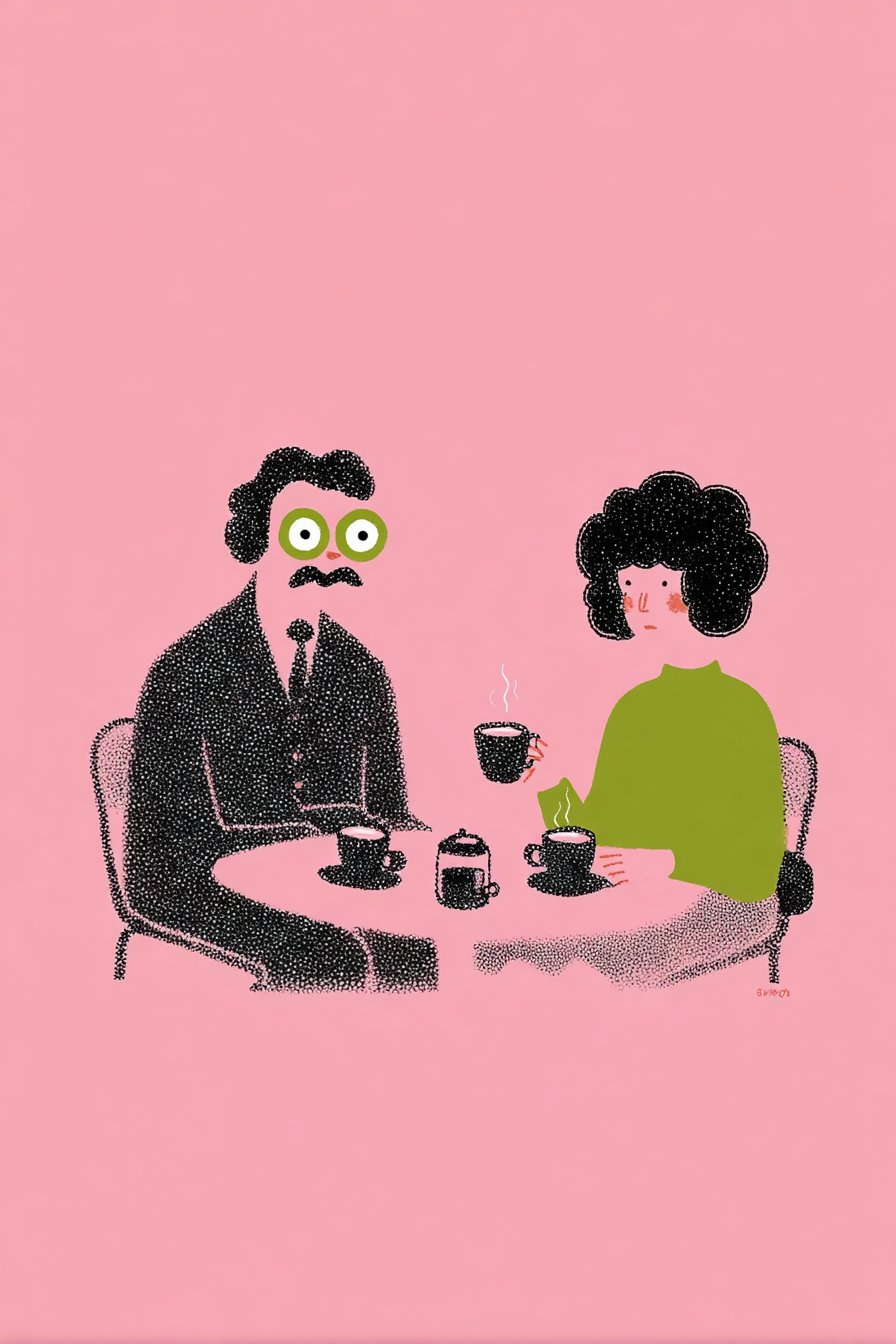
The final image uses a flat pastel pink field, dense black stippling, imperfect outlines, a limited olive-and-cream palette, and generous empty space. It should feel like a slightly odd vintage children's book print rather than a polished digital cartoon.
Best Inputs
Which scenes translate best into this style?
The style can handle people, animals, food, products, buildings, vehicles, and simple scenes. What matters most is whether the subject and its relationships remain readable after detail is removed.
- Choose one clear subject or a small group with strong silhouettes.
- Keep meaningful objects visible, such as cups, chairs, food, bags, or tools.
- Avoid distant crowds and backgrounds packed with tiny repeated detail.
- Use a tall ratio when you want poster-like pink space around the scene.
Visual Language
Why pink space and black stippling matter
The black dots act like both ink and shadow. They give hair, clothing, furniture, and objects enough weight to remain readable without realistic modeling. Imperfect edges keep the texture tactile and prevent the result from looking like sharp vector clip art.
The pink background does more than add color. It removes photographic context and turns empty space into part of the composition. Olive green, cream, muted red, and soft beige then work as small graphic counterweights to the black ink.
FAQ
Photo to storybook illustration FAQ
Common questions before creating a naive pink-and-ink illustration.
Will the tool copy the café scene from the reference?
No. The reference supplies the palette, texture, line quality, and mood. Your uploaded scene supplies the actual subjects, composition, and object relationships.
Can I use animal or object photos?
Yes. Animals, food, objects, buildings, vehicles, and products can all become simplified stippled storybook forms.
Why does the style use so much empty space?
Negative space keeps the concentrated black texture from becoming heavy and gives the image its poster-like Scandinavian editorial character.
Create a naive storybook illustration
Upload a portrait, pet, object, or everyday scene and reinterpret it with pink negative space and stippled black ink.
Make storybook art